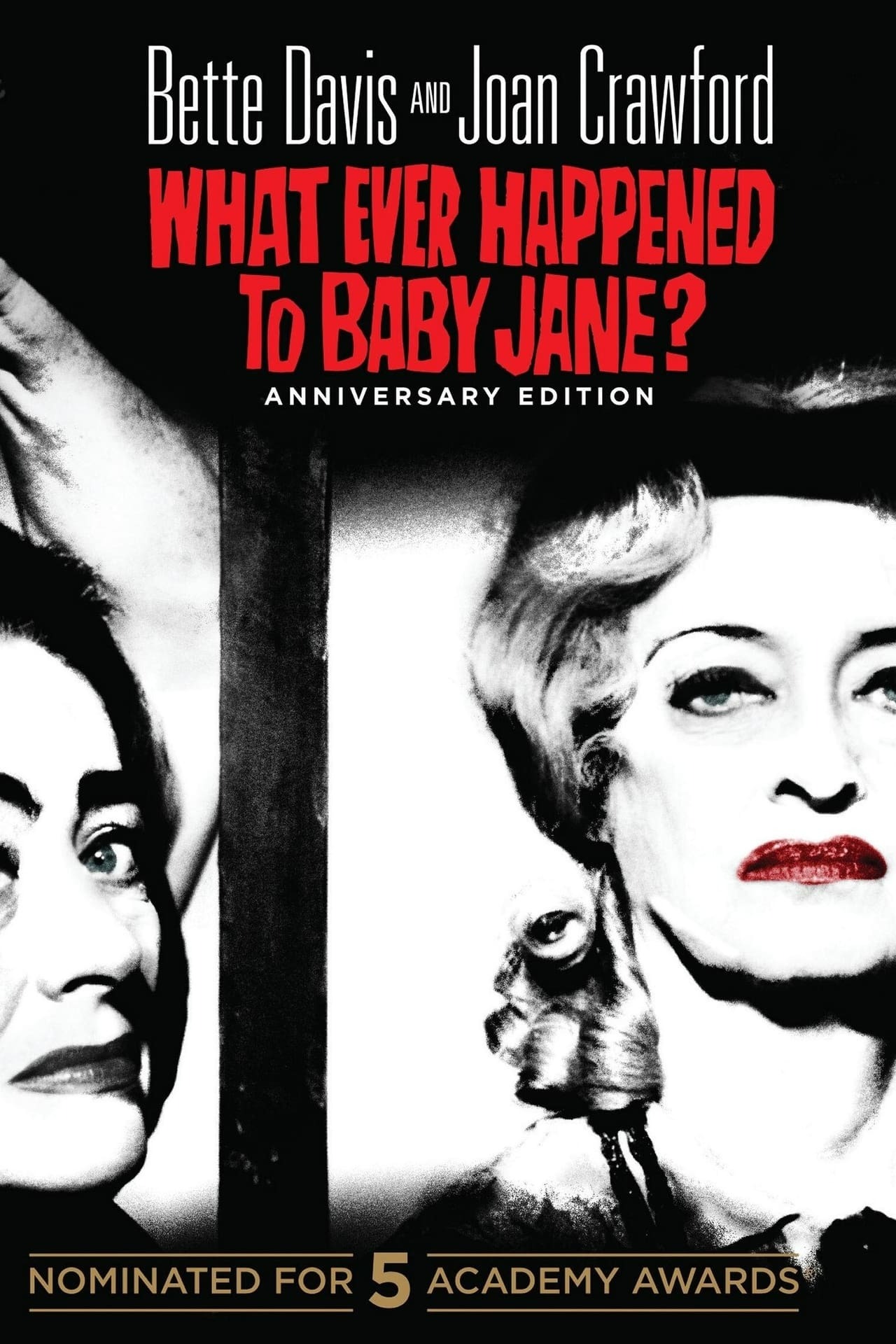
The year was 1961. Joan Crawford had already lost her husband, Alfred Steele, in 1959. Then her sometimes lover and forever friend, actor Clark Gable, died in 1960. Old age was usurping her life at rapid speed.
Financially, she was in no position to slow down to acknowledge it. She was irresponsible with her money; therefore, continuing her acting career—not for pleasure—but because she owed Uncle Tom, Peter, Paul, and everyone else, was nonnegotiable.
Her last starring role was, The Best of Everything in 1959. It wasn’t a commercial success, which she needed unlike starlets Audrey Hepburn and Elizabeth Taylor, who sustained the attention of moviegoers as they got older. Crawford was clinging desperately to the minuscule clout she had left in Hollywood, for the comeback role of her fledgling career.
Comparatively, Bette Davis was not experiencing a threat to her position in Hollywood, but she was no longer a young actress, and leading roles for actresses of her age were scarce. Unlike Crawford, Davis chose roles that worked whether she was young and beautiful—and her films were a hit with audiences and critics alike. Bette Davis’s filmography, as attractive as it was, was not the only persuasion for Joan Crawford: respect from one of her most revered peers also made the on-screen duo appeal to Crawford’s ego.
The two legends were rivals on set, as expected. Crawford’s daughter Cristina had already released the infamous autobiography, Mommie Dearest in 1960, and both Bette Davis and Joan Crawford published their life stories in the last few years. Although Joan Crawford is portrayed as a villain by her adopted daughter, it is Davis who appears insecure and needing to remind everyone of who has top-billing.
Nonetheless, both ladies are consummate professionals and controlled their grudges and insecurities enough to film the future classic in two months. Regardless of their ill feelings for one another, their animosity gave their performances more believability. Director Aldrich did nothing to quell the tension, as he predicted the theatrical benefit would make it worth the risk.
The movie premiered on Halloween 1962. Baby Jane Hudson was a once an adored Vaudeville star who, after her career faded into the background, never adjusted to life outside of the limelight. Her older sister Blanche gained stardom years later in the movies, which Baby Jane didn’t respond graciously to.
Years later, the sisters are older, and Blanche is a paraplegic who depends on her younger sister to care for her; this is where Baby Jane seizes her best role yet: the vengeful baby sister. Their parents are gone and they live in a multilevel, dilapidated mansion, where Baby Jane keeps Blanche confined to the second floor.
Gradually Baby Jane administers to her sister a daily life that Blanche can barely live. Her sinister sister thwarts any attempt she makes to seek help. Until the housekeeper catches on to Baby Jane’s envy turned to fury.
The two accomplished actresses are in their prime in these dual leading roles. They both give and take from each other at the right times. The nosy neighbor delivers a key performance to the story, and the drunken accompanist reminds viewers of what Baby Jane is holding on to.
It’s a good thing Warner Brothers studio listened to director and producer Robert Aldrich, who fought for the two fading stars to be the leads in this psychological horror film.
Overall, it’s a good adaptation of the Henry Farrell novel by the same name, until you get to the end, for reasons I won’t say. I wouldn’t want to spoil it for you.
Discover more from Junkie 4 A Story
Subscribe to get the latest posts sent to your email.
 Junkie 4 A Story