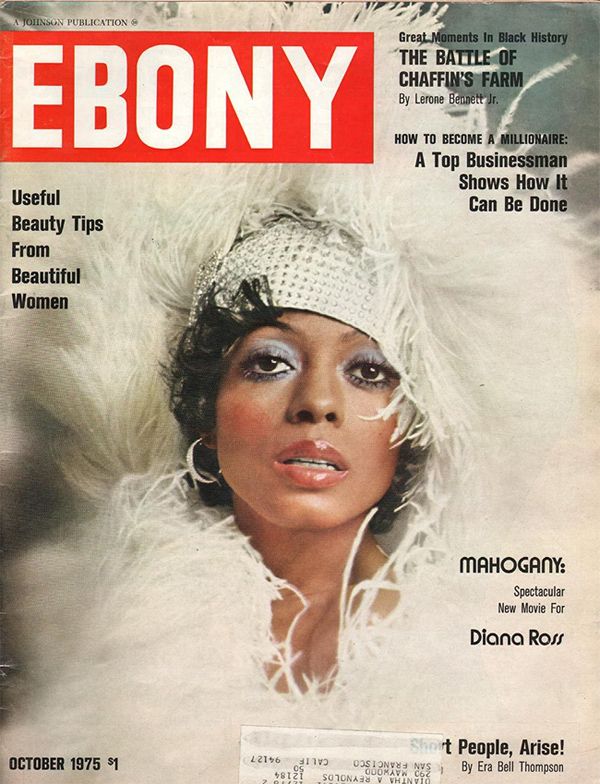
In 1970, Diana Ross gave her final performance as a Supreme. She owed so much to the group and Berry Gordy, who made her a superstar. She had her eyes set on a solo career that would surpass the success of the group. Not only was music on her mind, but Hollywood as well.
For her acting debut, Ross didn’t stray far from her musical roots. Miss Ross played jazz singer, Billie Holiday in Lady Sings the Blues, loosely based on the singer’s autobiography. Even though the Motown legend portrayed another singer, assume not that the role wasn’t challenging: Billie Holiday led a tumultuous life up to her early demise, at the age of forty-four.
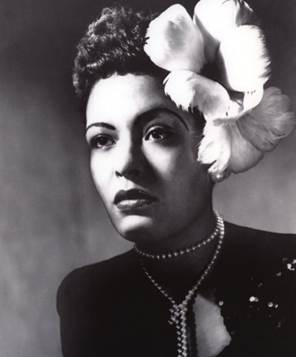
Photo from ar.inspiredpencil.com
For her stellar performance, Diana Ross received the ultimate recognition, an Oscar nomination for best actress. It was a competitive category: the nominees were Liza Minelli, Diana Ross, Maggie Smith, Cicely Tyson, and Liv Ullmann. Although Liza Minelli was awarded the golden statue, Diana Ross’ performance was aligned with talented actresses. Not to mention, this was the first year that two African American actresses were nominated in this category.
Miss Ross’ acting debut was a success. Her next role would prove her lasting power in Hollywood. Motown mogul, Berry Gordy managed her career with a steady hand. Not only did Gordy produce the film, but he also directed it. Let’s give a round of applause to a man who knows his limitations, and chose not to act in the film, as others in his position succumbed to that temptation at the annoyance of moviegoers everywhere.
Mahogany was released in 1975, starring Diana Ross and her costar from Lady Sings the Blues, Billy Dee Williams. Fans and even haters anticipated her follow-up after her Academy Award nominated role. Like in music, the second time is a testament to whether one will last beyond the “new girl” interest that one is given.
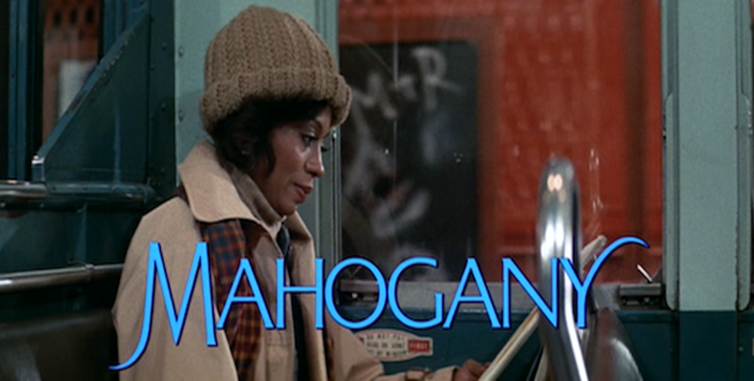
Photo from lookatthesegems.com
The film is about Tracy Chambers, a struggling fashion designer trying to make it in an industry that sees Chicago as a place you end up instead of a city that can produce fashion designers worthy of a show in Paris. Of course she has the interference of love complicating her career ambitions.
Mahogany did not receive critical acclaim like it’s predecessor. Roger Ebert wrote, “Mahogany is a big, lush, messy soap opera, so ambivalent about its heroine that we can’t even be sure the ending’s supposed to be happy.” My default mode is to argue yet I don’t have a counter to his opinion.
Billy Dee Williams plays an ambitious politician and her love interest. He’s a good-looking man and employed so, you’re rooting for their love at first, but when you realize he only sees her as a feminine accessory, he can use for his political gains, his looks and charm wear off before the midpoint.
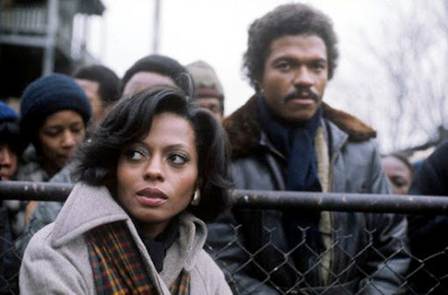
Photo from film-authority.com
The film is not the best follow-up to a classic like Lady Sings the Blues, however, it’s not a bad film; and Berry Gordy did a good job for the first time in the director’s chair. It’s interesting how you won’t find many reviews of the film in the year it was released. The silence tells you what critics thought of it.
I will say the plot twist feels like abandoned film from other movies inserted to fill the time. The first hour covers the insecurity a thirty-something Black woman, from a humble background, innately fights with as she pushes past the threshold her kind is told to stay within. This could have been a Girl on Fire story of the day. Maybe it was the director, the star, or the writers, who knows who’s to blame, but somewhere the story got lost and forgot what story it was trying to tell.
The performances by Diana Ross, Billy Dee Williams, and Anthony Perkins are good. The betrayal of 1970s Chicago is dismal, finding love as a single, Black woman is a toss-up, and a Black designer making it in fashion is a pipe dream. Still, I would recommend this movie, if only to learn why it has a 29% rating on Rotten Tomatoes.
Also, you get a surprising laugh, watching Diana Ross and Billy Dee Williams rock fur coats in Chicago. How daring, considering you didn’t have the threat of your crimes being caught on camera in the 1970s; though these were the days when furs were status symbols how watches, cars, homes, etc. are today. How the times have changed, thanks in part to People for the Ethical Treatment of Animals aka PETA.
Discover more from Junkie 4 A Story
Subscribe to get the latest posts sent to your email.
 Junkie 4 A Story