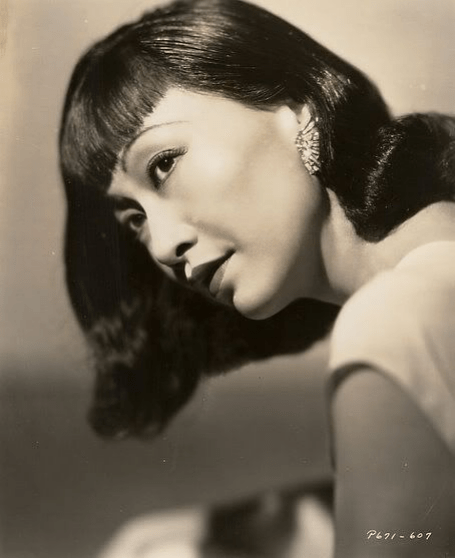
Anna May Wong was a Chinese American actress in the Silent era and talkies, during the first half of the 20th Century. Her successful years were between the 1920s and 1940s, in spite of the limited roles she could play–a result of prejudice in Hollywood and America. In those days, an interracial relationship was forbidden: that is, white-skinned people having romantic relations with a Black or Asian person. Furthermore, it was prohibited in Hollywood films.
Although Anna May Wong played stereotypical characters, she usually received good reviews for her performances. After years of frustration with Hollywood’s race obsession and prejudiced American audiences, Wong moved to Europe to get better acting roles, which she did get. Not only were European audiences not hung up on race, but they also appreciated her character portrayals. She was a smash hit in Germany and London, getting rave reviews and playing the kind of leading ladies that were only given to White actresses in Hollywood.
Not wanting to lose good talent to European filmmakers, Hollywood then welcomed her back with versatile roles. The bliss was short lived; eventually, Hollywood reverted back to status quo and the offers dried up for Wong.
In her forties, she remained relevant by becoming a fashion icon. She was no longer making headlines for her career moves; she continued to garner attention for her style choices.
It was disappointing to hear Anna May talk about how excited she was to visit China for the first time only to be rejected by Chinese people for playing stereotypical roles in American films. On her press tour, she was treated like she was not a “true” Chinese, which presumably caused her more pain since she hadn’t been accepted by American audiences either.
Wong was a third generation Chinese American who was made to feel like an outsider in the country she was born and raised in. Then she goes to China, only to realize that they see her as a trader, helping the enemy oppress their people.
I’m unsure how she defended herself against those claims in the moment, but I find it odd that the Chinese people blamed this actress for perpetuating derogatory stereotypes about Asians. It’s contradictive that the Chinese did not invest in Hollywood films, yet they expected a Hollywood actress—who was a minority—to have the power and influence in a White-male, dominated industry to impact how Asians were portrayed.
It is naïve to think that because one acts in films, they make decisions on character development, which scripts get greenlit, casting decisions, etc. As if Anna May Wong could extract control away from White men, who were the decision makers in those days. It’s inexplicable why people blame low-hanging fruit for a corroded tree but that doesn’t stop them from doing it time and time again.
It does make me wonder why China didn’t invest in Hollywood, so they could have some control over their image. Although, I’m sure Hollywood made it difficult for foreigners to infiltrate the system however, when filmmakers are desperate for financing, they are more inclined to yield to foreigners with deep pockets. On the flip side, since the 1920s, China has had a long history of strict censorship of American films. Maybe those restrictions cut both ways, causing dissatisfaction all around.
Even today, Asian actors are limited in the roles they are given. It’s unfair, however if you don’t invest time and money in films, you can’t expect to have a say in the execution of them.
Today, actors with little power and influence in Hollywood are still given the responsibility to affect change. They are blamed and their people take offense to their betrayal, however, if minority actors turned down those roles, Hollywood would just find another actor to fill them or whitewash the problem away. If minorities are not in the room, they can’t gain the power to influence change. Sometimes you must take what you are given so you can change what you get.
Unfortunately, Anna May Wong didn’t move the needle much in her day, but had it not been for the sacrifices she made, decades ago, we would not have the Asian and Asian American actresses that we have working in Hollywood today.
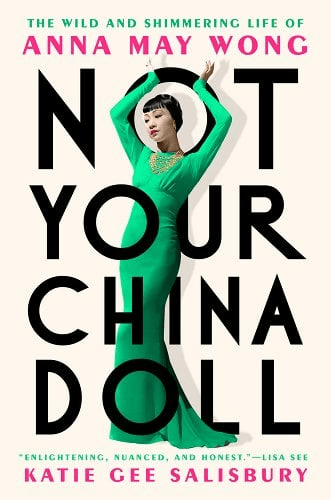
If you are interested in Anna May Wong’s story, check out Not Your China Doll, written by Katie Gee Salisbury.
 Junkie 4 A Story