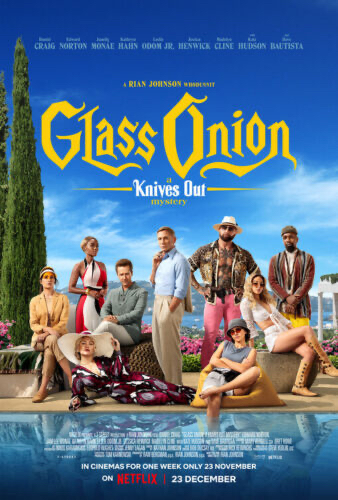
The second installment in the Knives Out series, Glass Onion was not on my immediate list of movies to watch when it debuted on Netflix, December 23, 2022. The previews never compelled me to rush to open my Netflix channel. It could be the bevy of celebrities the streaming service tried to sell its subscribers on. That was a big mistake, considering the audience that liked the first movie, weren’t there for the A-list cast, instead the clever storytelling and Agatha Christie-esque mystery. None the less, I succumbed to fomo and excessive previews being shown, telling me I should like this, and decided to give it a watch.
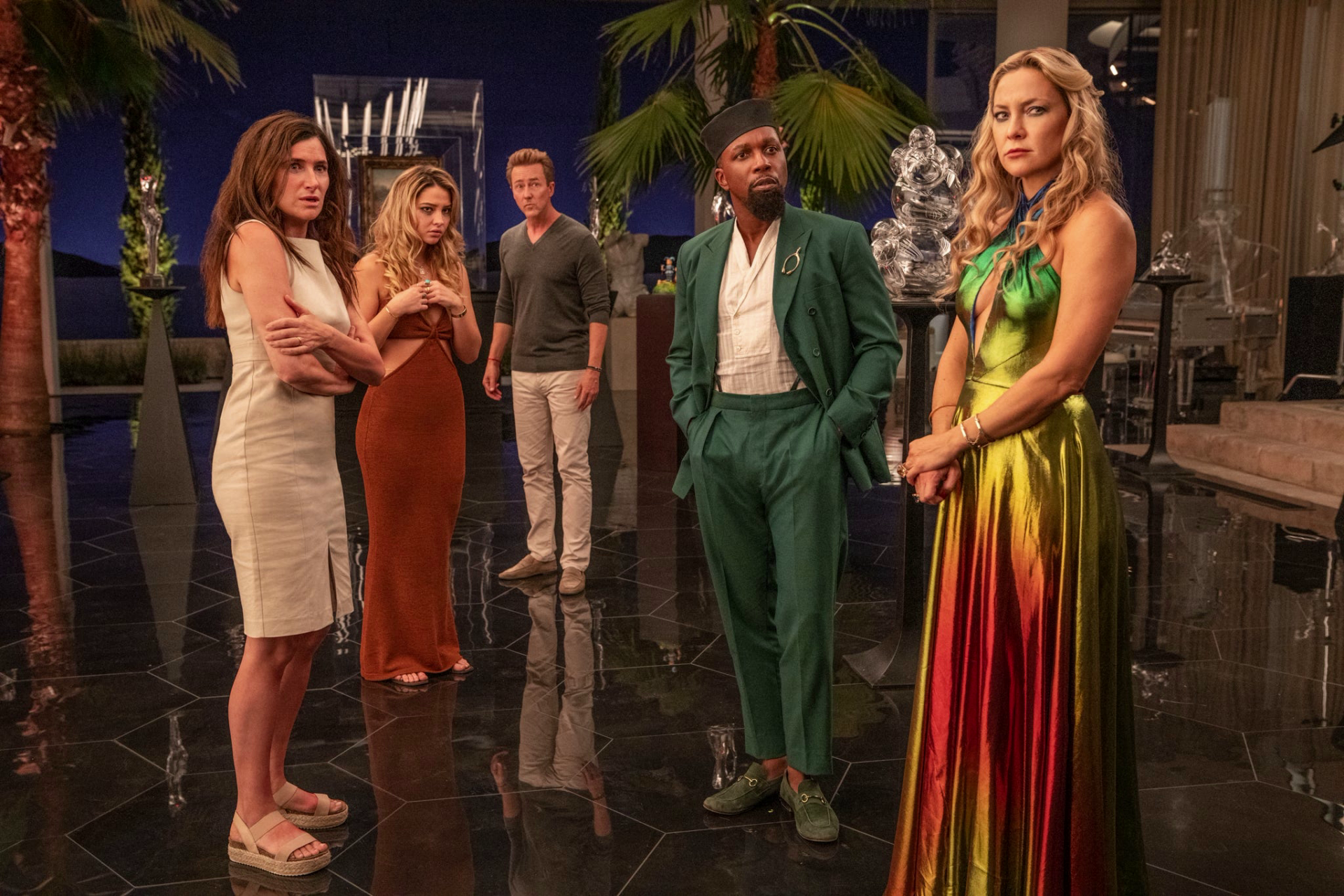
I thought this Knives Out Mystery would not be as good as the first, which was loyal to its genre. However, from the first five minutes, I found myself immersed in the murder mystery that ensued.
At the helm of this plot is Edward Norton’s character, Miles Bron, a tech billionaire who lures a group of friends, to his pretentious mansion on a secluded island, for some murder mystery shenanigans. This is not the only conspicuous metaphor traipsing through Rian Johnson’s movie.
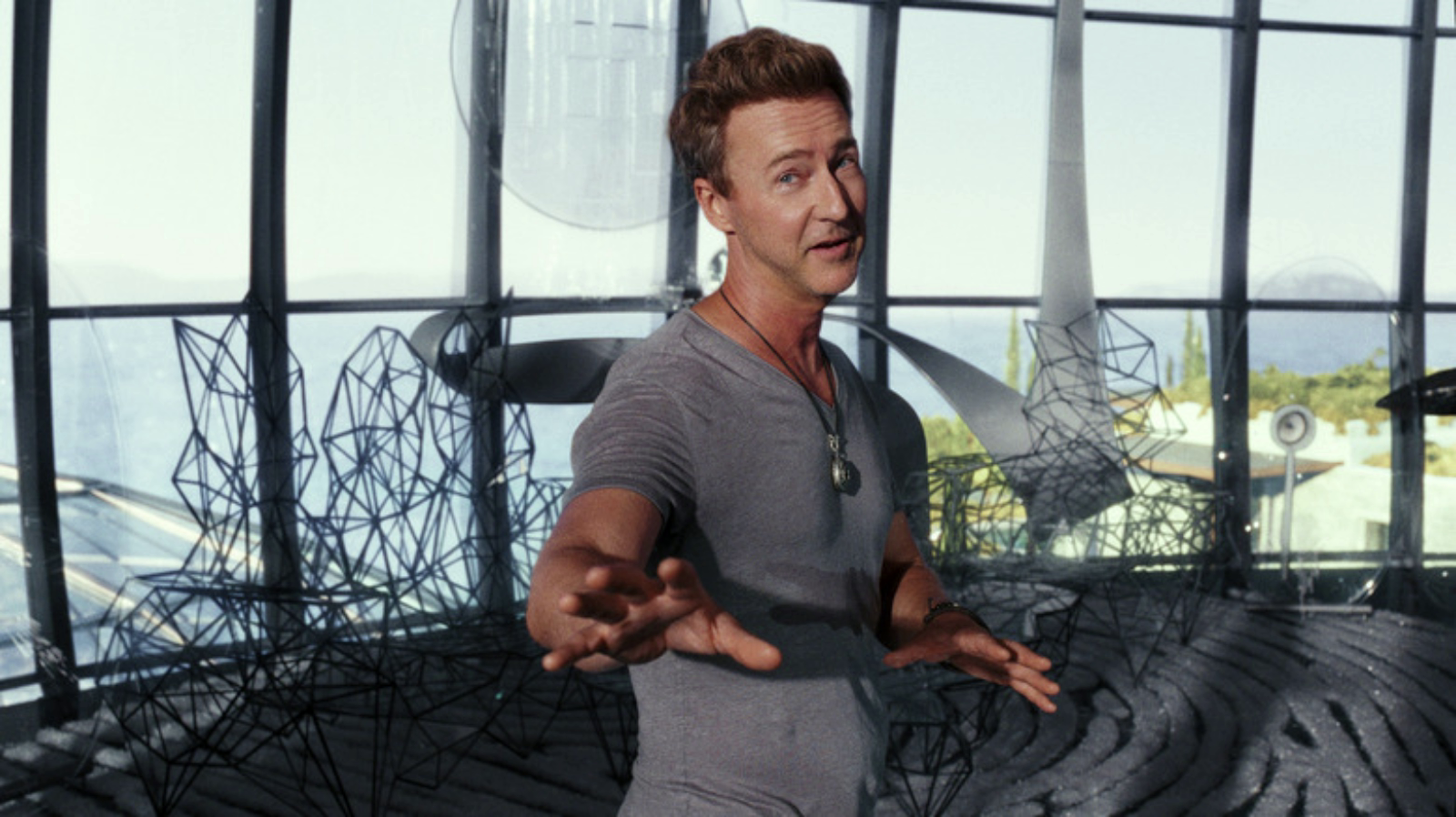
The story unfolds in two-hours and nineteen minutes. By the midpoint, you start to wonder what else is left to warrant another hour of filming. Much like the glass mansion, there are layers and layers to this story–like an onion–that keeps peeling, as if it is missing a center.
The film starts by poking fun at the early stages of the 2020 pandemic. Celebrities and influencers are reinventing themselves in at-home settings, trying to disguise the mundaneness of their existence with hilarity.
Miles claims that he sent out five invitations, through a parcel delivery service. However, the successful detective, Benoit Blanc also arrives for the festivities. Daniel Craig returns in this role but his performance is almost overshadowed by the esteemed supporting cast. I’m not sure if his accent increased an octave this time around, but he is bordering on a caricature of his previous performance.

At times, it feels like a soap opera, making me question the two-hour melodrama. Then Rian Johnson, as if he can hear my complaints, accelerates the plot, sensing a drifting audience.
The disrupters, aka shitheads, are the celebrities we love and hate. They have ostentatious accents, vocabularies, and wardrobes. They make the evaporating, American, middle-class feel like peasants, incapable of catching crumbs. They use words like embrethiate (Google is laughing at you for searching this word) and reclamation only to remind us simpletons that their parents afforded them ivy-league educations.
The old saying about people who live in glass houses thematically inserts itself implicitly and explicitly in the mystery of who killed Cassandra Brand among other questionable behavior committed by the group. When Miles states, “I want to be responsible for something that gets mentioned in the same breath as the Mona Lisa, forever,” it’s not the first time you’ll resist the urge to slap him.
This whodunnit makes fun of celebrities in the most delectable way. The irony of Kate Hudson playing a washed-up model turned clothing designer, who had a sweat-shop scandal, was not lost on me. And when Birdie Jay’s assistant says, “we will do what we always do: deny, half-apologize, and then go silent,” it was a comical and honest account of celebrity fuckups in the social media era. 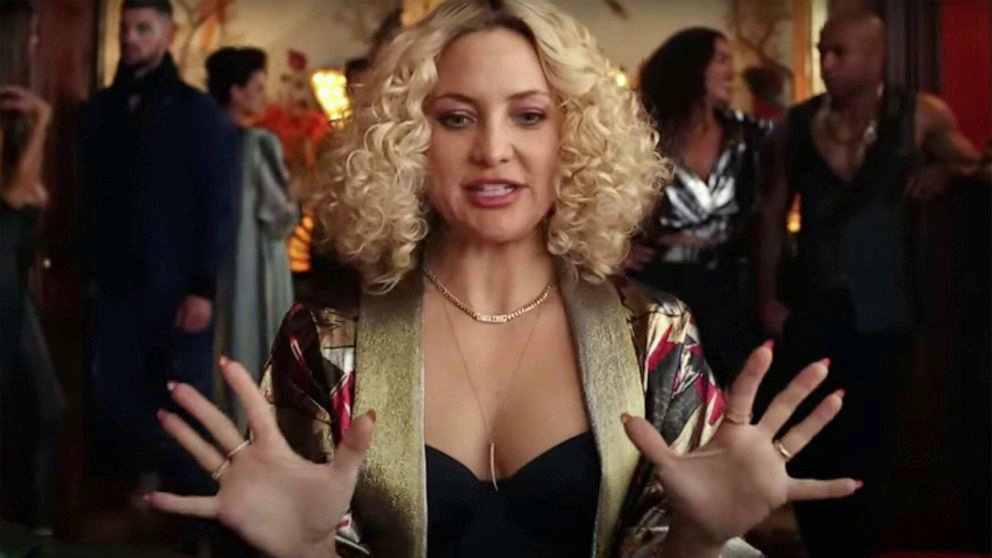
Janelle Monae gets extra points for playing dual roles with accents. Her characters were well developed. I even forgave her for the times when her accents got meshed up in between characters. 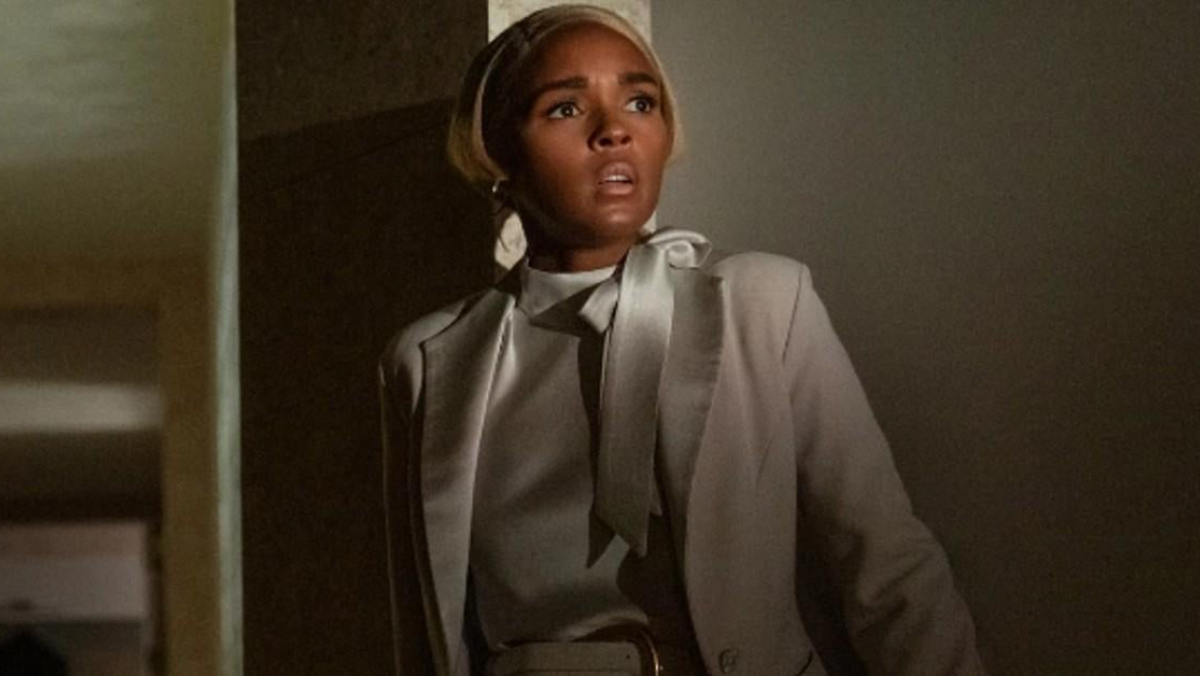
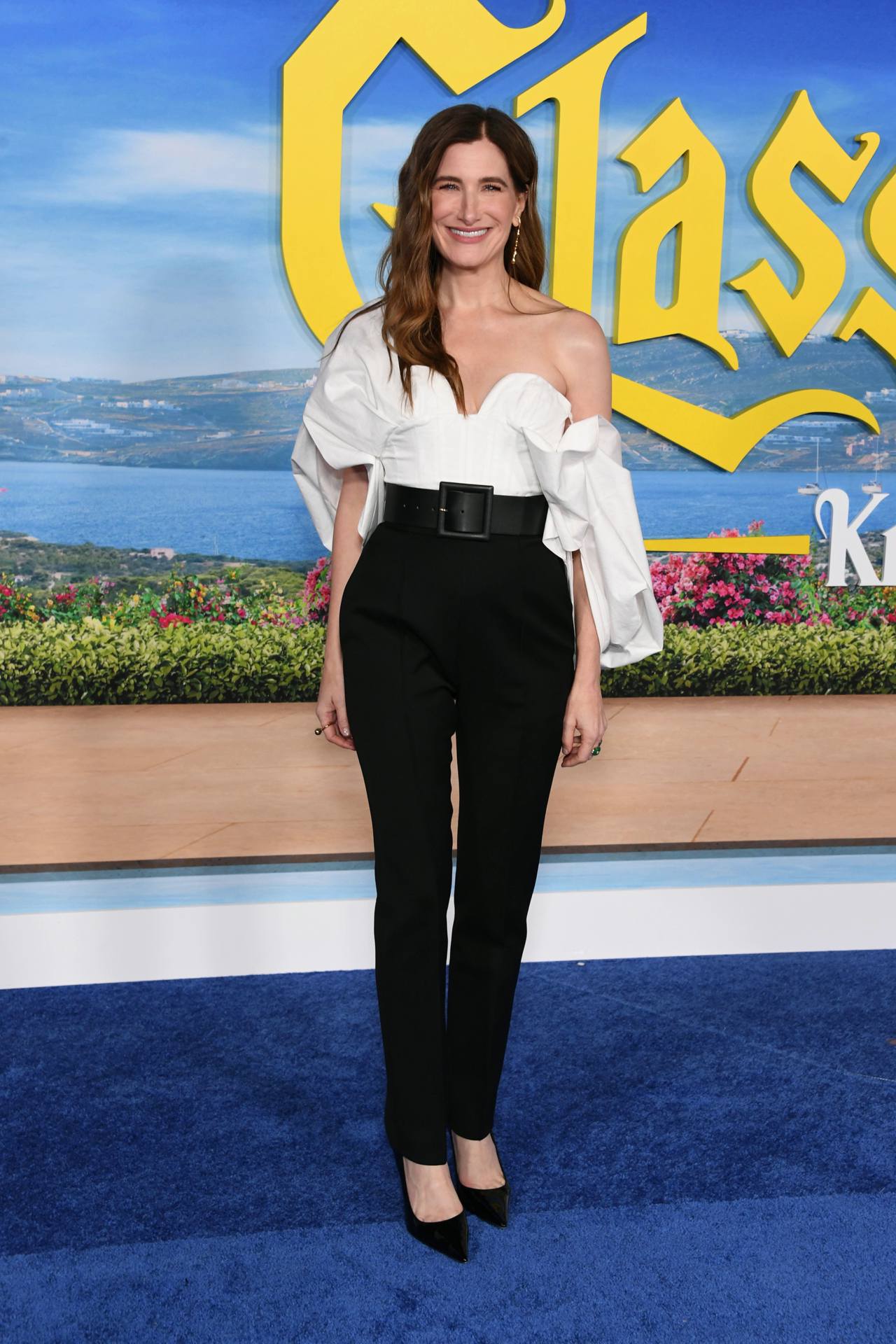
Kathryn Hahn, on the other hand, is a talented actress who doesn’t use her muscle as much for this role, which is disappointing. One could argue that playing a politician is to blame for her forgettable performance. I would entertain that argument however, it’s Kathryn Hahn. She can make a story about a white shoelace interesting.
This film would have been a superior success if Rian Johnson had not gone the Martin Scorsese school of filmmaking route. The more than two-hour running time did hurt this story, making the ending not as impactful. Still, it is a great follow up and worth your time.
 Junkie 4 A Story